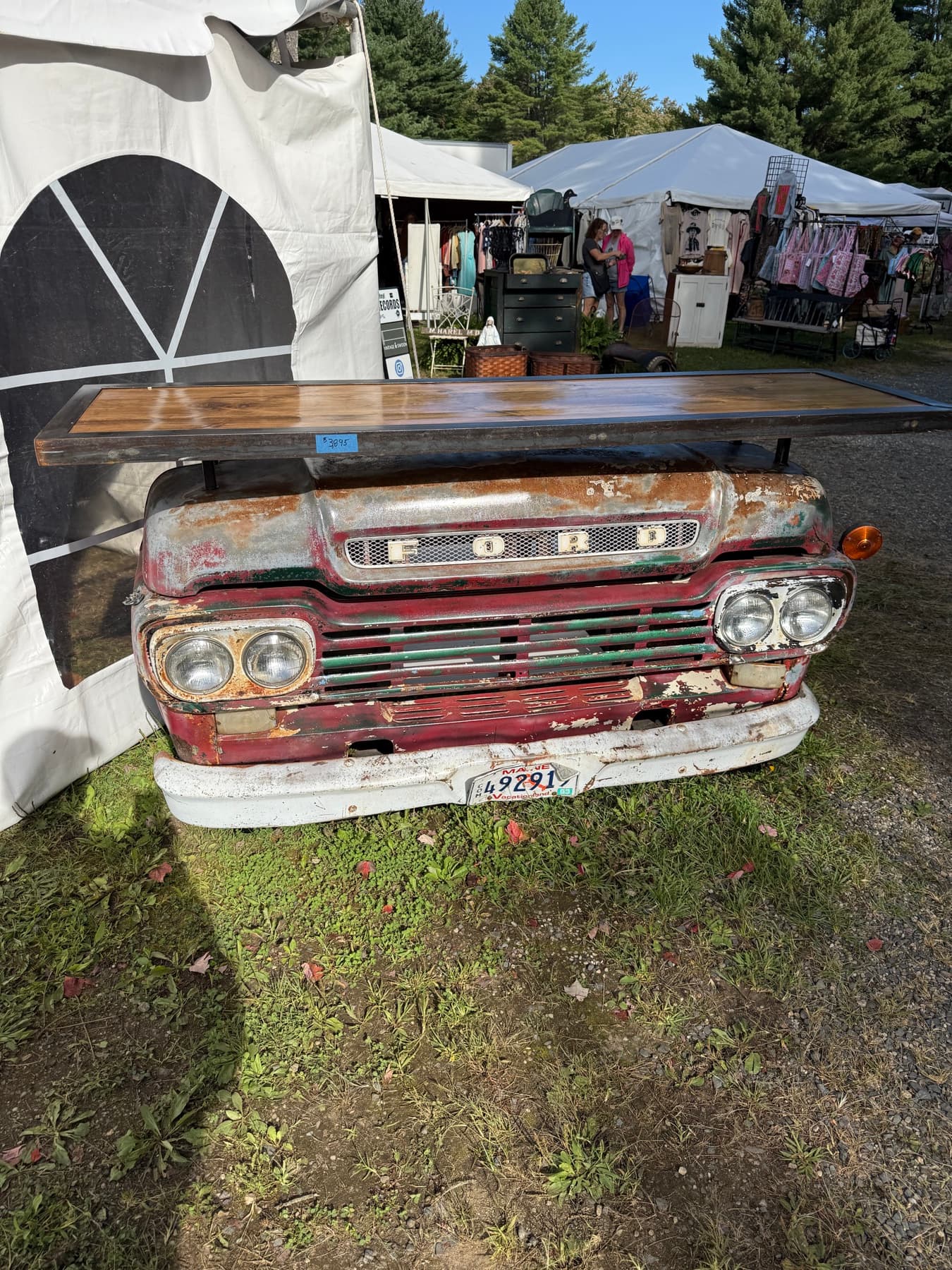
Furniture is one of the most rewarding categories at Brimfield — real casegoods and statement pieces regularly show up at a fraction of retail. It's also the category most likely to go wrong if you haven't thought about logistics before you're standing next to something you love.
Measure before you go, not after you fall in love
This is close to universal advice across every account we've reviewed: bring a tape measure, and use it on your own space before you use it on anything at the show. Know your doorways, stairwells, and hallways at home, and know what will actually fit in your car if you're driving it yourself. One measuring tape is the cheapest insurance against a purchase you can't get through your own front door.
Inspect before you commit
Check joinery, wood quality, and hardware. Test drawers and doors for smooth operation — that's a good sign of honest construction and repair history. Watch for non-original replacement parts, which can affect both value and authenticity. Photograph anything you're seriously considering, including the field and booth so you can find it again.
Negotiating on furniture
Larger items generally have more room to negotiate than smalls, and that room tends to open up further as the week goes on — see our day-by-day breakdown for the timing pattern. Know your top number before you start talking, and be genuinely willing to walk away. A real walk-away sometimes prompts a better offer on the spot; it isn't a rejection, it's part of how the negotiation works here.
Getting it home — the part people underestimate
This is where furniture purchases most often go sideways for first-timers. Brimfield doesn't appear to have a formal, bookable freight company the way some antique shows do. What it has instead is an informal porter system — people who move purchases from a booth to your car (or a U-Haul) for a negotiated, unposted price. In a real interview with Brimfield porters, the mechanics were explained directly: pricing depends on what's being moved and how far, and the real money for porters comes from full pack-outs at the end of a buying trip, not the smaller in-field carries. See our full logistics guide for more detail on how this works.
Your practical options, in order of how most people actually handle it:
- Ask the vendor to hold it. Mark it "sold," keep shopping, and drive around to load it later — a completely normal, common practice.
- Hire a porter to move it to your vehicle, or all the way to a rental truck if you're making a real haul.
- Bring furniture blankets and real tie-downs if you're driving it home yourself.
- Rent a truck or van in advance if you already know you're hunting for large pieces — deciding this after you've already bought something is the hard way to do it.
The one thing to avoid: assuming you'll figure out transport after you've already paid. Ask about it — with the vendor, or with a porter — before you commit to the purchase, not after.
Common mistakes
- Buying something that won't fit through your own door or your car, because you didn't measure first.
- Underestimating how hard it is to move a heavy piece across an actual field — grass, gravel, and mud, not a smooth showroom floor.
- Skipping a condition check because you're excited, and finding the damage once it's home.
- Assuming shipping or delivery will just be arranged for you. It usually won't be — that's on you to sort out.
A note on this post: this is compiled from real visitor accounts and an on-record porter interview, cross-checked against our own logistics research. We've since visited Brimfield in person (September 2026) but didn't buy furniture on that trip specifically — this page still reflects secondhand accounts, not our own purchase experience.
Never Miss a Show
Get show dates, field guides, and trip-planning tips delivered to your inbox. Monthly, never spammy.
Not ready to subscribe? Grab the free printable cheat sheet — no email required.