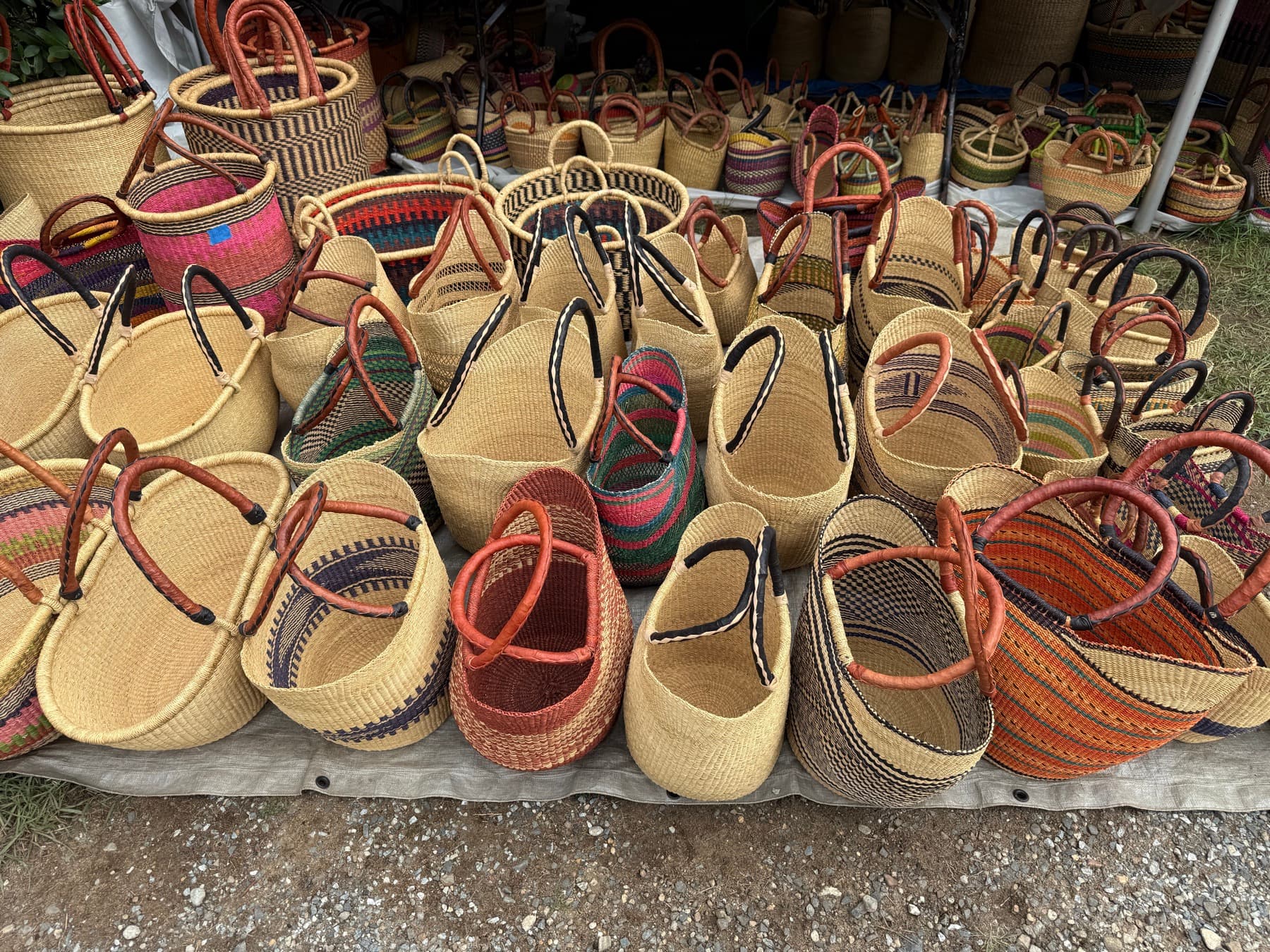
Brimfield covers an enormous range of categories, but some come up again and again across visitor accounts as genuine strengths of the show — places where the selection, pricing, and expertise are deep enough to be worth planning a visit around.
Art glass & pottery
Consistently one of the strongest categories. Names that come up repeatedly: Fenton, Murano, Lundberg, Steuben, Viking Glass, Blenko, Correia, and carnival glass generally. A few practical tips from experienced buyers:
- Uranium/vaseline glass can't be reliably identified by color alone — a blacklight is the standard test, and some vendors keep one at their booth for buyers to use. Not everything that looks the part glows, so test individually rather than assuming.
- Signed or maker-marked pieces command real premiums over unsigned ones — check the base for etched marks or stickers before assuming a piece is unattributed.
- Genuine vintage and contemporary reproductions are commonly displayed side by side in the same booth. Look closely at each piece rather than trusting the surrounding inventory.
Jewelry
A huge share of Brimfield's vendors carry jewelry — one experienced buyer estimated roughly a third of all booths have some. Strong categories: Victorian and Art Deco pieces (bookchain necklaces, filigree, reliquary lockets), Bakelite, micro mosaics, and signed designer costume jewelry.
- Sterling silver is frequently priced by weight, not by piece — worth asking, since it changes how you think about a gemstone-set item's price.
- An acid test can confirm sterling; some serious buyers carry an electronic gem tester to verify stones on the spot.
- Check for missing rhinestones, broken clasps, or missing inlay before buying — damage is common and affects value significantly.
Furniture
Everything from primitive country pieces to Continental antiques to mid-century modern shows up here, often at a real range of price points within the same field.
- Don't dismiss a chair missing its caned or woven seat as junk — buy for the frame and have it re-caned or reupholstered.
- Test drawers and moving parts before buying — smooth operation is a good sign of quality construction and honest repair history.
- Watch for non-original replacement parts (a mismatched stand, a glued-in fix) that can reduce both value and authenticity.
Vintage clothing
A growing, increasingly dominant category at Brimfield — several longtime vendors describe the show shifting toward clothing over the past decade. Denim, workwear, band T-shirts, and designer pieces all show up, with pricing that spans from $20 basics to four-figure grail pieces for rare, documented items.
- Condition and completeness drive price dramatically — original tags, no repairs, and documented rarity all matter.
- Designer resale (bags, shoes) is common but so are fakes — inspect logos, stitching, and hardware closely, and don't assume a low price means authenticity.
Toys & collectibles
A genuinely deep category that surprises people expecting only "fine antiques." Star Wars, Transformers, video games, character glassware, and militaria all have active buyer communities at the show.
- Completeness matters enormously — a figure needs its original accessories to hit real market value; a game needs its box and manual.
- Check battery compartments on old electronics for corrosion before buying.
- Reproductions are a real risk in some categories (Staffordshire figures, cast-iron banks) — seeing many identical copies of the same item in one booth is a red flag.
Radioactive glass & pottery (a genuine niche worth knowing about)
Orange-and-red-glazed ceramics (Fiestaware and similar) made before the early 1940s, and again from roughly 1959–1972, often used uranium oxide in the glaze and register on a Geiger counter. Several collectors bring one specifically to test pieces on the spot — treated as a fun quirk rather than a real safety concern as long as you don't eat or drink off the glaze.
A general buying philosophy worth borrowing
One design-focused shopper's rule of thumb sums up good Brimfield instincts well: buy things with real craftsmanship and character, not just because something is old. Look twice — most experienced visitors say they miss things on a first pass through a booth. And when you find something you genuinely want, don't plan on coming back for it later — the near-universal experience is that it's gone by the time you circle back.
For the practical side of a trip — timing, what to pack, negotiation strategy — see our first-timer's guide.
A note on this post: this is compiled from real visitor and dealer accounts, not our own firsthand buying experience yet. We're visiting Brimfield in person this September and will expand this guide with our own finds and observations after that trip.
Never Miss a Show
Get show dates, field guides, and trip-planning tips delivered to your inbox. Monthly, never spammy.
Not ready to subscribe? Grab the free printable cheat sheet — no email required.