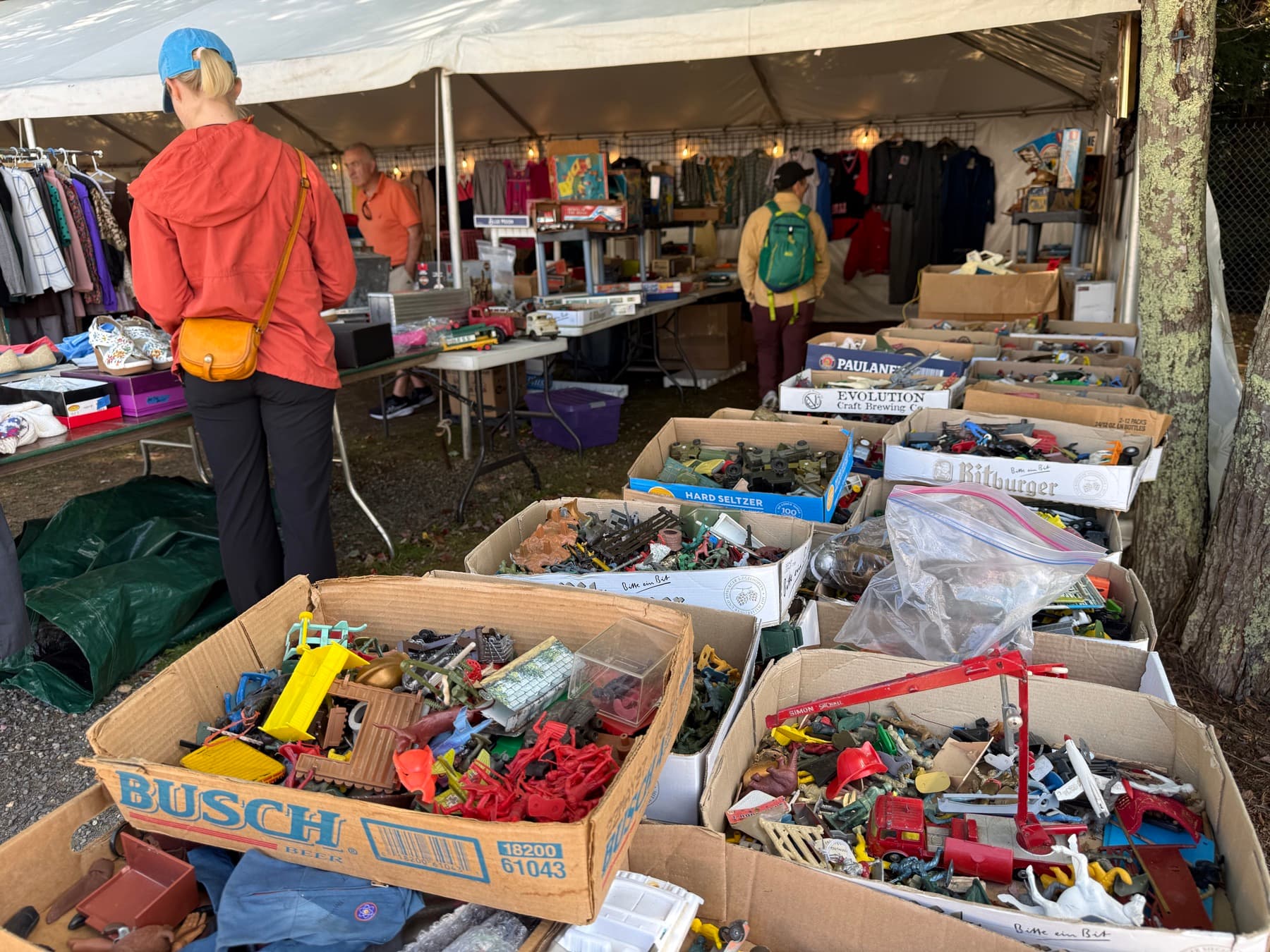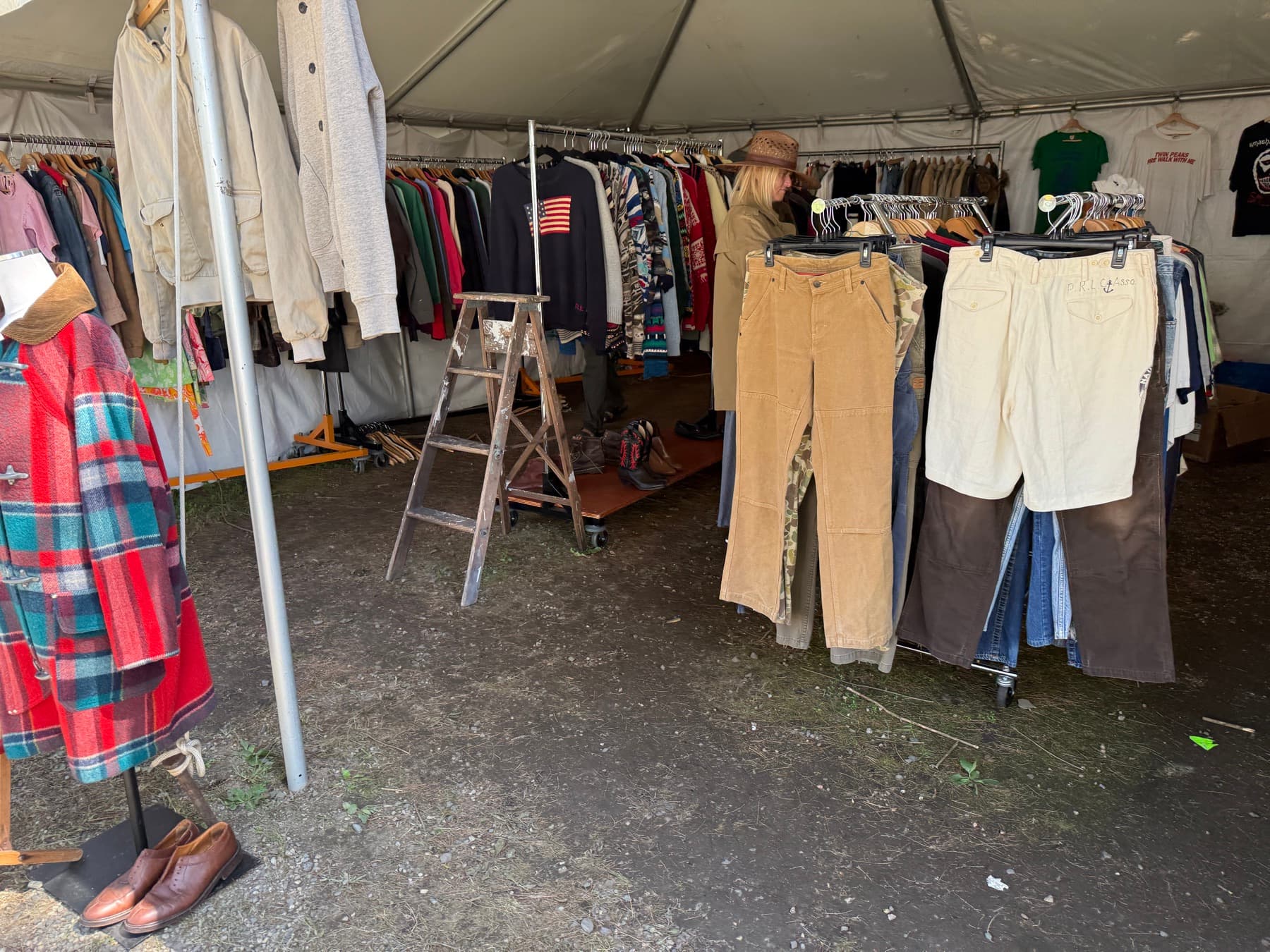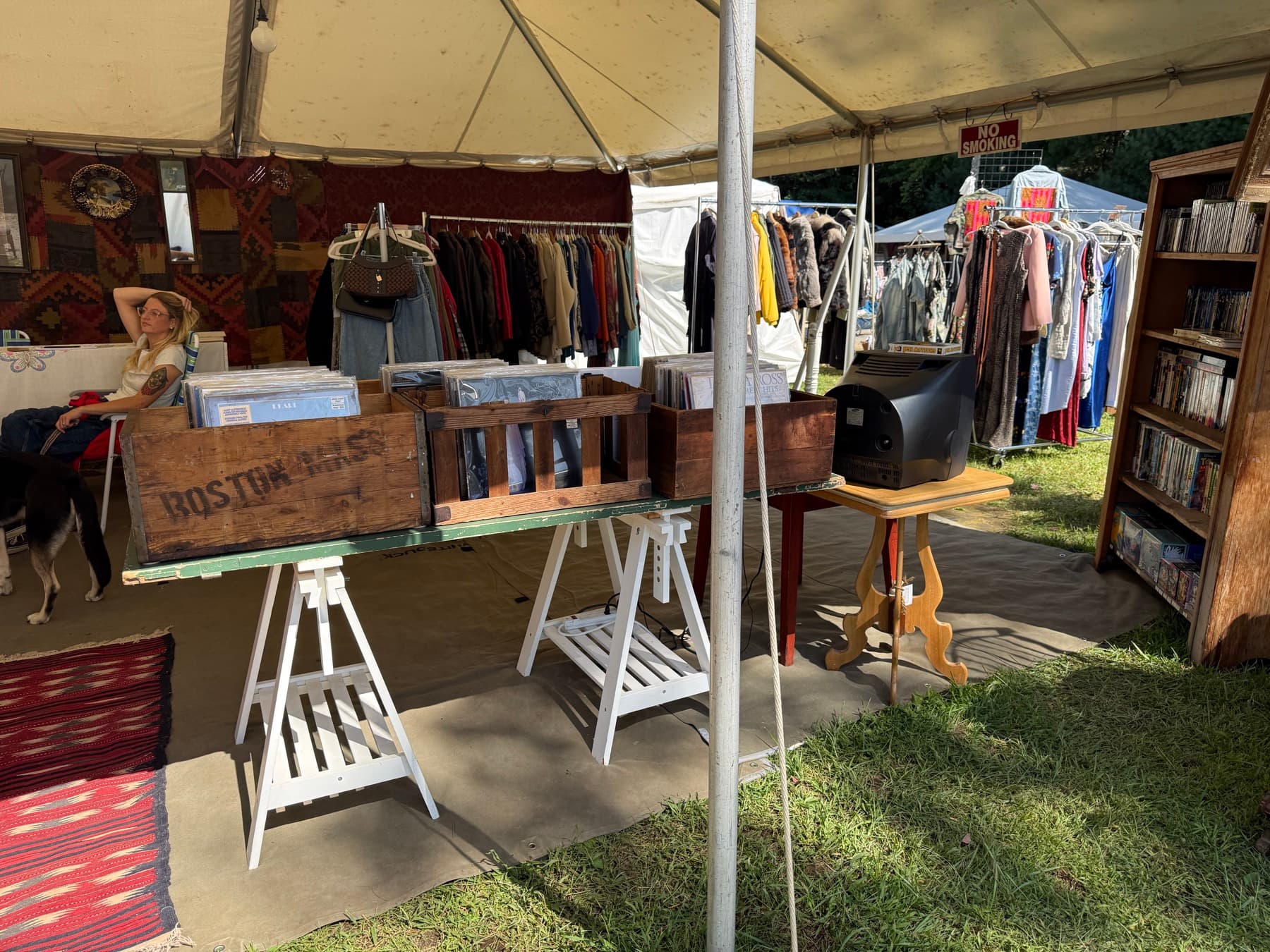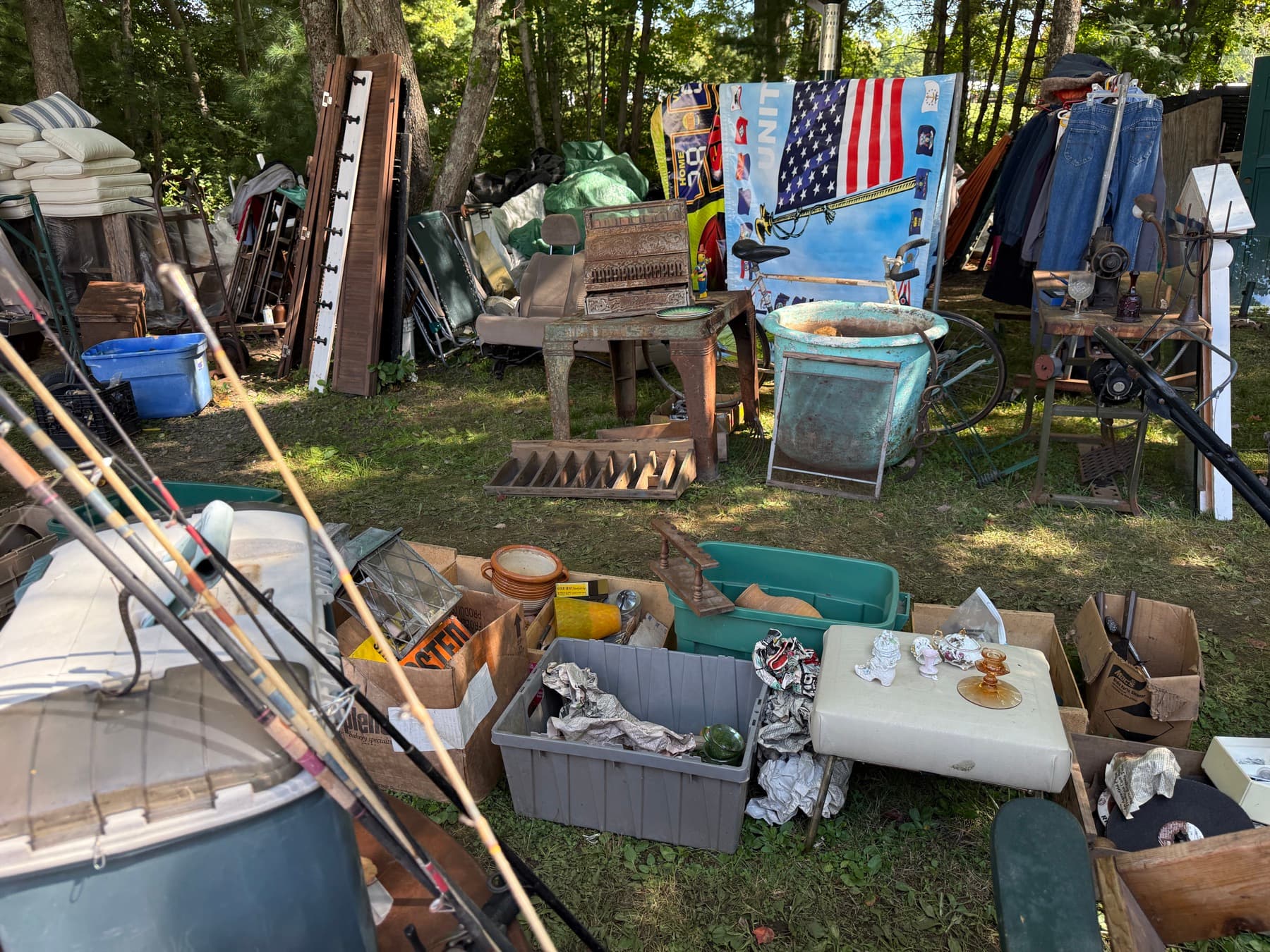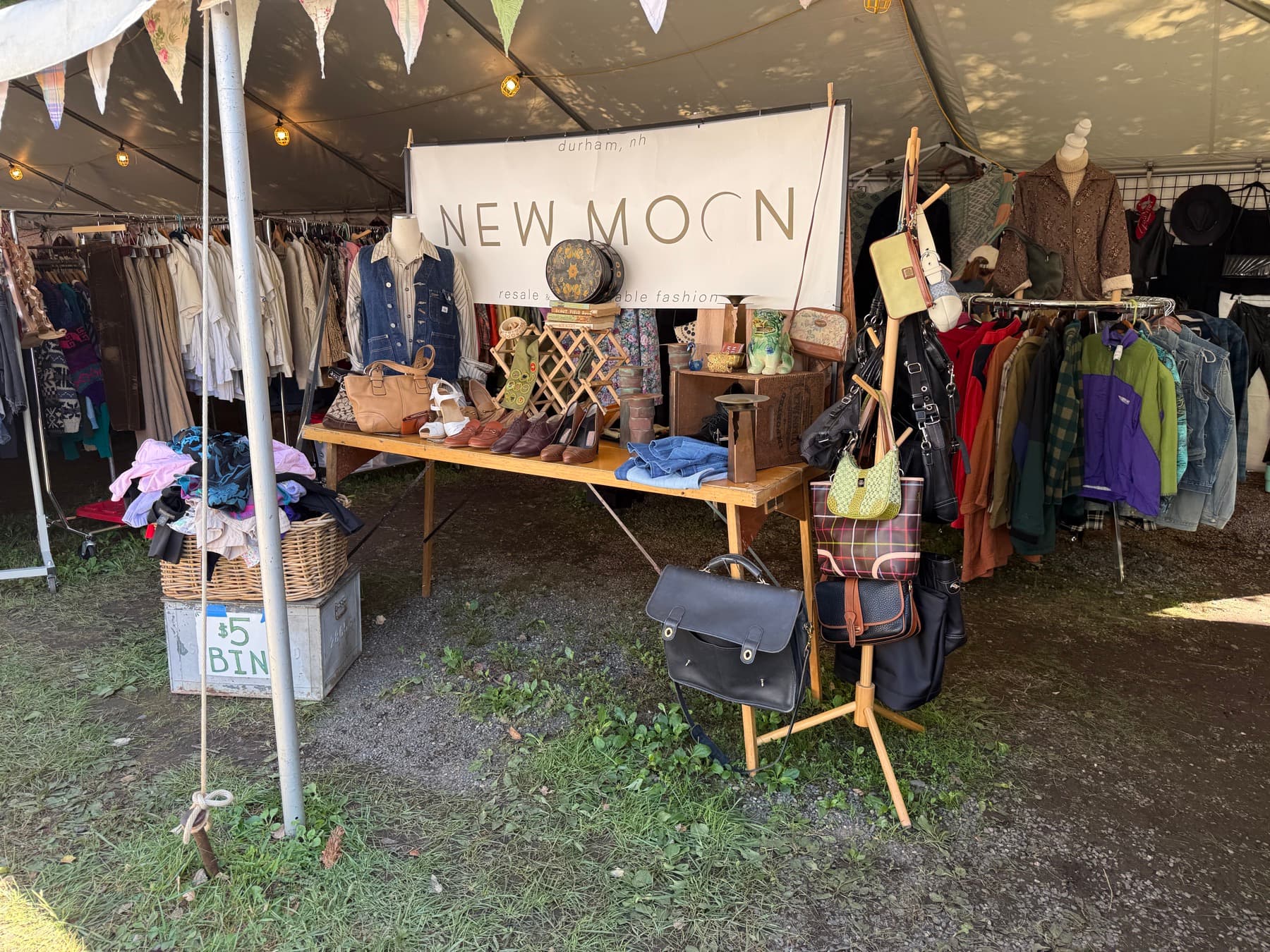
With 20+ independently-run fields and no single map or gate, "just show up and see what happens" is a real strategy at Brimfield — but everyone who's done this more than once says the same thing: it works a lot better with a plan.
Arrive early, on purpose
This is the single most repeated piece of advice, from casual first-timer guides to a designer who's been going for years. Ken Fulk describes the appeal directly: "Part of the real joy is rushing the fields with the masses when they open." Because fields open at different times across the week, "arrive early" means knowing each field's actual opening day and time — see our day-by-day show schedule.
One real myth worth busting, though: "arrive early" doesn't mean "arrive at 5am." One shopper, a repeat attendee, called out exactly this fear on camera: "You do not have to be there at 5:00 a.m. to get a spot. If you also saw that tip on Instagram, just know that influencer is a fear-mongerer. We have arrived at 8:00 a.m. for years, and something like 95% of the parking is still available."
Pick your days deliberately
- Best selection: the first days a field is open — Tuesday and Wednesday, generally.
- Best deals: the tail end of a field's run — vendors would rather discount than repack unsold inventory.
- Smaller crowds: rainy days, and the July show specifically.
- Two-day minimum if you want to see meaningfully more than a fraction of the show.
What to actually pack
One item shows up in every single verified account gathered for this research, unprompted, without exception: a folding cart or wagon with real wheels. One attendee described theirs as "a game changer... the rubber wheels make it so easy to pull it through the mud, dirt, rocks, gravel, sawdust, wood chips," and specifically warned that standard small-wheeled carts get dragged, not pulled, through rough terrain.
Everything else is fairly standard flea-market prep, but consistently repeated:
- Cash, in smaller bills, plus a checkbook as backup — see our full breakdown on how much to bring
- Comfortable, sturdy walking shoes
- Sunscreen (including scalp/hat line), a hat, and layers — what you actually need shifts a lot by show; see our season-by-season weather guide
- Furniture blankets, if driving purchases home yourself
- A phone charger / battery pack
- Water and snacks — one shopper waited 30+ minutes for a grilled cheese and now packs her own food
- Baby wipes or hand sanitizer — for handling dusty, dirty secondhand items
- A tape measure — for furniture, and for matching items you already own
- A small magnet and a loupe or magnifier — dealer-bag staples for a quick metal or maker's-mark check on the spot
- A notebook or your phone's notes app — with 20+ independently run fields, it's easy to lose track of a piece you want to circle back to
Common first-timer mistakes
- Showing up with zero plan and no sense of field locations or hours
- Rushing a purchase without doing any price research first
- Skipping breaks until exhaustion sets in
- Arriving late in a field's run and finding the best inventory already gone
- Overdoing the pressure. A two-dealer panel closed with advice worth repeating verbatim: "Keep your expectations neutral... just like every market, sometimes you find stuff, sometimes you don't." and "Don't take it so seriously. Live a little."
A note on this post: this is compiled from published sources and real visitor accounts. We've since visited Brimfield in person (September 2026); this specific shopping-strategy content predates that trip and hasn't been individually re-verified against it yet.
Never Miss a Show
Get show dates, field guides, and trip-planning tips delivered to your inbox. Monthly, never spammy.
Not ready to subscribe? Grab the free printable cheat sheet — no email required.